
Why the traditional sports media rights model is eroding (and how to fix it)

The global sports rights market has reached an all-time high of $60B and is projected to surpass $70B by 2030. However, behind these headline numbers lies a complex reality: high-value, top-tier sports are facing flatlining growth rates, while traditional broadcast models are rapidly eroding.
Our recent research shows the structural shifts altering the media rights landscape. Here is a breakdown of why rights growth is stalling and how rights holders can diversify their revenue streams.
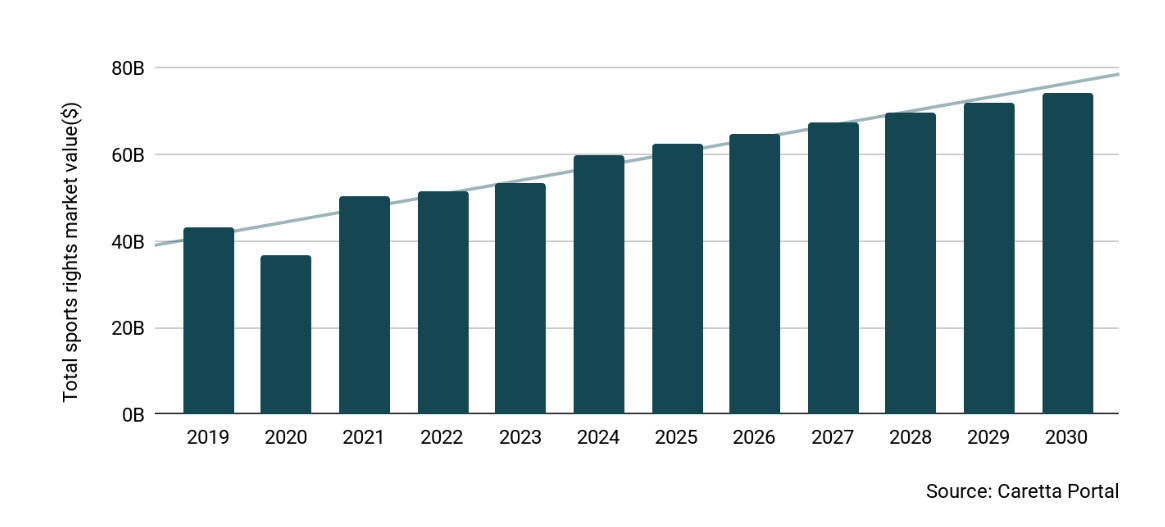
The domestic rights ceiling and the illusion of growth
For years, domestic broadcasting deals have been the engine driving football finances. However, in major European leagues, domestic valuations have reached their limit:
- Stagnant domestic growth: the Premier League has seen flat domestic growth across three rights cycles, while Serie A domestic rights values have fallen.
- World Cup distortions: periodic FIFA World Cup cycles inject massive capital every four years, creating an illusion of overall market health while underlying annual values remain flat.
- Bidding fatigue and piracy: major streaming platforms and traditional buyers are reducing bid amounts due to rising subscription fatigue and persistent digital piracy.
While the English Premier League remains far ahead of its European peers in generating international rights revenue, other major leagues remain heavily over-dependent on domestic rights.
Streaming growth comes with real risks
Streaming is steadily capturing market share from traditional pay-TV platforms. Between 2018 and 2028, streaming rights spend is projected to grow at a CAGR of 3.5%, compared to a 2.9% CAGR contraction in traditional telco and pay-TV spend.
However, moving to streaming is not without risk. The breakdown of DAZN's domestic deal with France's Ligue 1 highlights the dangers of relying heavily on a single buyer:
- High monthly pricing (€29.99/month) and rampant piracy led to subscriber shortfalls (approx. 500,000 subscribers against a target of 1.5M).
- The partnership ended early with a €100M exit fee, prompting the French League (LFP) to launch its direct-to-consumer platform, Ligue 1+.
Diversifying media and digital content monetisation
To protect against market volatility, rights holders must move beyond relying solely on traditional live broadcast packages. Essential digital strategies include:
- Short-form and near-live snippets: reclaiming short-form rights to sell non-exclusive, near-live clips directly to mobile apps.
- Vertical video and social content: tailoring behind-the-scenes content for vertical social feeds, turning social platforms from marketing expense centres into high-margin digital assets.
- Broadcaster diversity: splitting rights packages across diverse broadcast partners to prevent systemic risk if a single partner encounters financial distress.
Unlocking new commercial revenue streams
Beyond broadcasting rights, technology is unlocking major commercial opportunities:
1. Virtual advertising (VA)
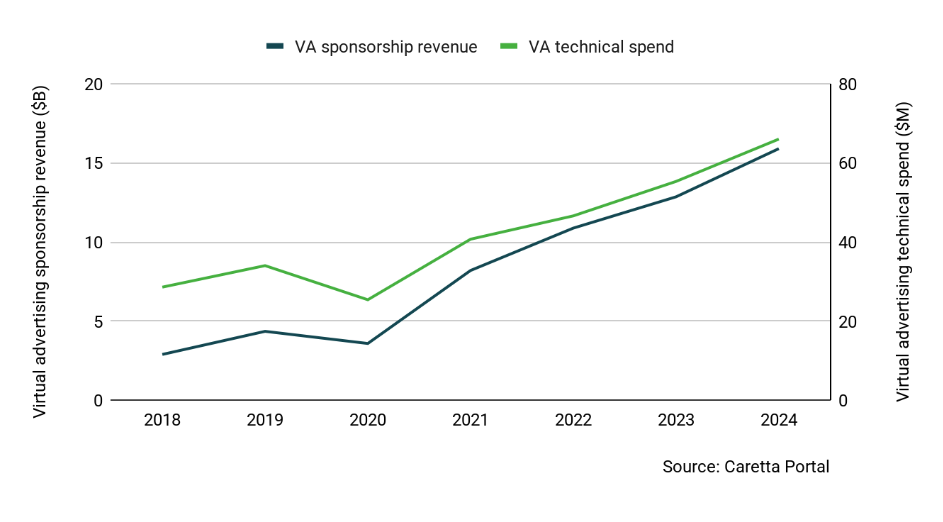
Virtual advertising has become a primary commercial growth driver. Since 2018:
- Sponsorship revenue tied to virtual advertising has grown from $2.9B to $15.9B.
- Technical investment in VA has expanded from $29M to $66M, reflecting a massive uptick in global adoption.
2. Stadium and venue transformation
Modernising live venues enhances fan engagement while opening new revenue streams. By deploying 360-degree LED ribbon boards, transparent LED panels, data-driven fan experiences, and AR spots, venues can turn matchday attendance into a hyper-targeted commercial environment.
Key takeaways for sports rights holders
- Rebalance revenue: over-reliance on domestic broadcasting rights poses severe long-term risks.
- Leverage technology: adopt virtual advertising and short-form digital monetisation to unlock non-rights revenue.
- Upgrade matchday experiences: transform venues with modern Pro AV and connected fan technologies.
For further insights and industry analysis, contact Caretta Research at info@carettaresearch.com.
Blog post tags
Blog posts
Read more
September 2, 2026

July 21, 2026
July 7, 2026
