
Sports tech investment increases 11% annually as industry tackles slowing rights market

Concentrated rights income and falling revenue per match put international expansion, sports tech and virtual advertising at the centre of the growth strategy.
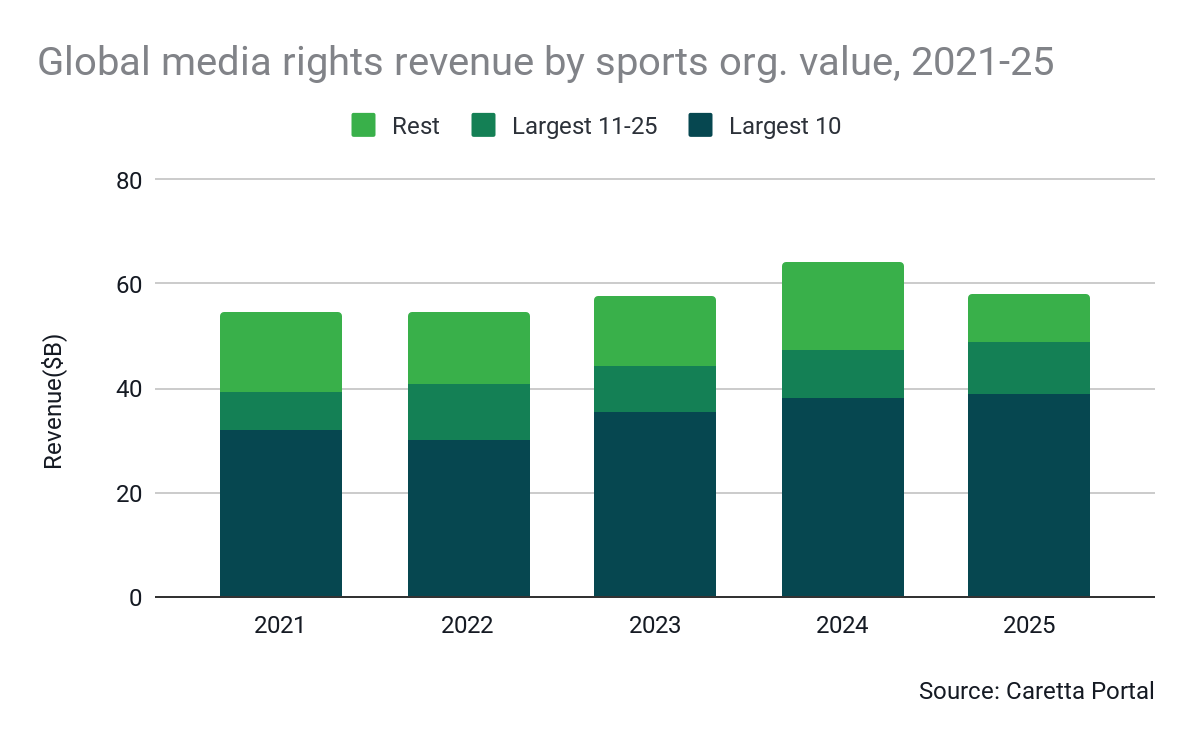
Between 2021 and 2025, sports tech software and services grew at a compound annual growth rate (CAGR) of 11%, reaching $2.9B in 2025. Meanwhile, media rights wealth is heavily concentrated at the top: just 25 major players capture nearly 85% of global revenue, leaving thousands of others to share the remaining 15%. According to our latest research, this creates mounting pressure across the wider industry to extract more value from every match and fan.
Bigger rights deals can conceal weaker economics
Even the largest football competitions face pressure on revenue per match. The Premier League’s most recent $8.5B domestic agreement over four years includes 35% more broadcast matches, but revenue per match falls by approximately 24% compared with its previous rights sale, from around $10.5M to $7.8M.
The expanded UEFA Champions League format also sees revenue per match decline by approximately 16% between the two most recent rights cycles. Adding more games can make the total contract larger, but it doesn't increase the value of each individual game. Bigger rights deals don’t always mean more money per match. Sports organisations need ways to earn more from the audiences they reach. Sports tech can help them sell regional advertising, build direct relationships with fans and protect their paid content.
International audiences offer room to grow
Across the top 15 sports properties, international rights values increased by 42% across the most recent vs the previous deal cycle, compared with 4.3% growth for non-US domestic rights. A wider mix of broadcasters, streaming services, direct-to-consumer apps and creator channels offers different ways to reach those audiences. The commercial challenge is turning that reach into income.
Virtual advertising allows sports organisations and broadcasters to overlay physical in-venue and on-competitor sponsorship with virtual graphical alternatives. This creates additional regional sponsorship packages for each regional feed, further boosting international monetisation.
Sports tech helps turn reach into revenue
Performance and coaching tech leads the market, helping teams secure better results, earn more prize money, and keep athletes fit through demanding schedules. Fan engagement platforms help sports organisations build direct relationships with viewers through registrations, interactive experiences and subscriptions. Spending on these platforms reached $712M in 2025, while also unlocking indirect revenue through the fan data collected from these activities.
Brand and IP protection accounted for a further $652M. Tools that detect and remove illicit use of sports’ intellectual property help safeguard sponsorship and licensing revenues for federations, leagues, teams and individual athletes.
With rights wealth concentrated at the top, sports organisations have a stronger reason to develop revenue beyond the next broadcast agreement. Sports tech can help them reach international audiences, earn more from existing matches and build lasting monetisable relationships with fans.
Download the full research below, or contact us directly to info@carettaresearch.com.
Blog post tags
Blog posts
Read more
October 13, 2026

September 25, 2026
September 2, 2026
